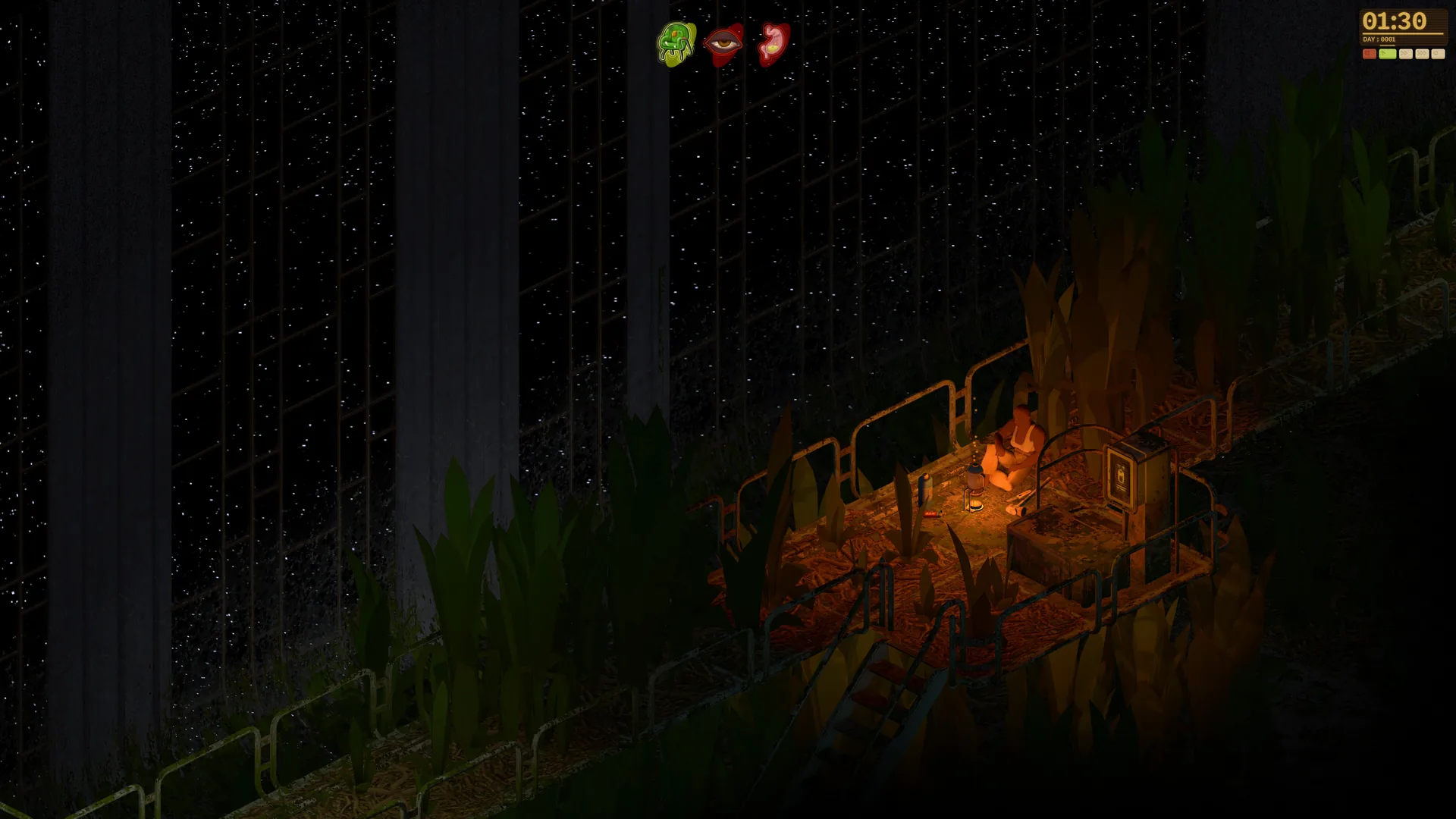
- Dandelion Void gameplay guide covers the core survival loop inside the derelict generation ship Pergola.
- Expedition rhythm: explore, scavenge relics, retreat, craft, and expand your shelter.
- Survival basics: hunger, thirst, comfort, and happiness all influence performance.
- Biggest threats: hostile alien plant life, sealed doors, and vacuum-exposed sections.
- Status: PC survival RPG by Manzanita Interactive; full release date still TBA.
What the Dandelion Void Gameplay Loop Looks Like
Dandelion Void places you inside Pergola, an abandoned generation ship swallowed by an alien jungle. Every session follows a repeating rhythm: venture into the overgrown corridors, gather what you can carry, and return to a shelter that grows more capable over time. The loop rewards preparation far more than aggression.
Video Highlights:
- Walkthrough of the derelict ark and jungle-corridor environments
- Base building and shelter construction in action
- Relic scavenging and resource gathering
- First look at dangerous hostile plant ecology
The systems connect tightly to each other. Resources become weapons, clothing, and furniture. Furniture improves comfort. Comfort improves morale, and morale affects how well you survive the next run deeper into the ship. Nothing you collect is wasted, and nothing you ignore stays harmless.
| Loop Stage | What You Do | Why It Matters |
|---|---|---|
| Explore | Move through ark rooms, mark routes | Finds loot and hazards |
| Scavenge | Collect materials, food, water supplies | Fuels all other systems |
| Retreat | Return to shelter before resources run out | Keeps runs from becoming emergencies |
| Craft | Make tools, weapons, clothing | Extends safe exploration range |
| Build | Expand shelter, place furniture | Raises comfort and happiness |
| Repeat | Plan deeper expeditions | Progressive risk and reward |
Treat every expedition as a round trip, not a one-way trip. Decide your turnaround point before you leave the shelter, not after your supplies are half gone.
Core Gameplay Features
The game combines several systems that reinforce one another. Understanding how they interact is the difference between struggling in the opening hours and building a stable foothold aboard Pergola.
Abandoned Ark Exploration
- Search derelict rooms and corridors
- Choose how deep to travel
- Identify return points and safe routes
Survival Horror Tension
- Unsettling, unpredictable environment
- Random environmental changes
- Preparation matters more than reflexes
Resource Gathering
- Salvage materials and relics
- Stockpile food and water supplies
- Feed crafting, repairs, and building
Base Building
- Construct and expand a personal shelter
- Organize storage and workspaces
- Improve recovery between expeditions
Character Customization
- Adjust the survivor's appearance
- Develop gear suited to ark life
- Prepare loadouts per expedition type
Changing Environments
- Random shifts alter routes and risk
- Forces adaptation, not memorization
- Keeps repeat visits unpredictable
Some hatches aboard Pergola seal off vacuum-exposed sections. Opening one without a functioning spacesuit can turn a promising route into a fatal mistake. Check your equipment before touching any unfamiliar door.
Beginner Survival Walkthrough
New players should follow a clear sequence before taking on the deeper, more dangerous parts of the ship. This walkthrough reflects the intended early progression: secure the basics first, then escalate.
Survey the Immediate Area
Explore the sections near your starting point. Map entrances, hazard zones, containers, and rooms that can serve as landmarks or return points later.
Gather Essential Resources
Collect materials plus food and water-related supplies before pushing into unfamiliar territory. Even a small reserve buys time when something goes wrong.
Craft Basic Equipment
Turn gathered resources into practical gear: tools, a weapon, and clothing appropriate for the environments you have actually seen so far.
Establish a Shelter
Build a dependable base where you can store supplies, place furniture, and recover between runs. Early shelters do not need to be pretty, they need to be reliable.
Manage Hunger and Thirst
Track basic needs on every expedition. Leave with enough consumables that a supply run never becomes an emergency.
Prepare Before Going Deeper
Upgrade equipment, restock, and plan a return route before entering threatening areas or reacting to sudden environmental changes inside the ark.
| Priority | Early-Game Goal | Reward |
|---|---|---|
| 1 | Safe shelter with storage | Reliable recovery point |
| 2 | Basic weapon and tool kit | Threat response and harvesting |
| 3 | Food and water reserve | Longer, safer expeditions |
| 4 | Furniture for comfort | Better morale and recovery |
| 5 | Spacesuit readiness | Access to sealed and vacuum zones |
If you can leave the shelter, travel two zones out, and return without dipping into emergency supplies, your foundation is solid enough to start planning deeper expeditions.
Crafting and Base Building Systems
Crafting converts everything you salvage into survivability. Weapons and clothing support expeditions, technology repair restores lost ship functions, and furniture shapes the living conditions that feed back into comfort and happiness.
| System | Input | Output | Survival Impact |
|---|---|---|---|
| Weapons and clothing | Salvaged materials | Combat and protection gear | Safer encounters |
| Technology repair | Recovered components | Restored functions | Progression unlocks |
| Furniture placement | Crafted items | Comfort improvements | Morale and recovery |
| Shelter construction | Building materials | Expanded base | Storage and safety |
| Cooking | Gathered ingredients | Prepared food | Efficient hunger management |
Base quality is not cosmetic. A well-organized shelter with thoughtful furniture placement measurably improves the conditions your survivor recovers under, which compounds across dozens of expeditions.
Separate your base into functional zones: storage near the entrance, crafting and repair in the middle, and living comfort deeper inside. This layout shortens resupply loops before each expedition.
Threats: Hostile Plants and Dangerous Zones
The jungle that consumed Pergola is not passive scenery. Hostile plant life can camouflage itself within the environment, and the game's horror tension comes from never being entirely sure which growth is just decoration.
- Camouflage: hostile plants can blend into ordinary jungle overgrowth
- Environmental shifts: random changes can turn a known route into a new threat zone
- Vacuum sections: breached hull areas require proper spacesuit preparation
- Sealed doors: some hatches protect you from what lies beyond, for now
Approach unfamiliar growth cautiously, keep escape routes in mind, and never commit to a fight deep in unfamiliar territory when your supplies are already low.
When environmental conditions change mid-expedition, default to retreating along your marked return route rather than pushing forward through unfamiliar, altered terrain.
Expedition Readiness Checklist
Before Every Deep Run:
- Food and water reserves packed above expected need
- Weapon and tools repaired or replaced
- Spacesuit condition verified for vacuum zones
- Return route marked with recognizable landmarks
- Shelter storage cleared for incoming salvage
For current release status and demo availability, check the official Steam page and the Dandelion Void official site. Modding support, including the planned map editor and Lua API, is covered in our dedicated customization section.
FAQ
Q: What is the core Dandelion Void gameplay loop?
The loop is explore, scavenge, retreat, craft, and build. You venture into the overgrown generation ship Pergola, gather resources and relics, return to your shelter, and convert salvage into equipment and base improvements that enable deeper expeditions.
Q: Is Dandelion Void single-player or multiplayer?
The Steam page currently lists a single-player experience, while official information also describes cooperative and PvPvE directions with player-hosted servers as planned multiplayer possibilities. Treat solo exploration as the core mode for now.
Q: How do hunger, thirst, comfort, and happiness interact?
Basic needs like hunger and thirst must be managed on every expedition, while shelter comfort and happiness affect recovery and survival performance between runs. A better-furnished base compounds into better expeditions.
Q: Can I try the game before release?
Yes. A public demo is available through the official Steam page, offering a hands-on preview of exploration, survival, crafting, and shelter-building systems. The demo covers only a portion of the planned full game.