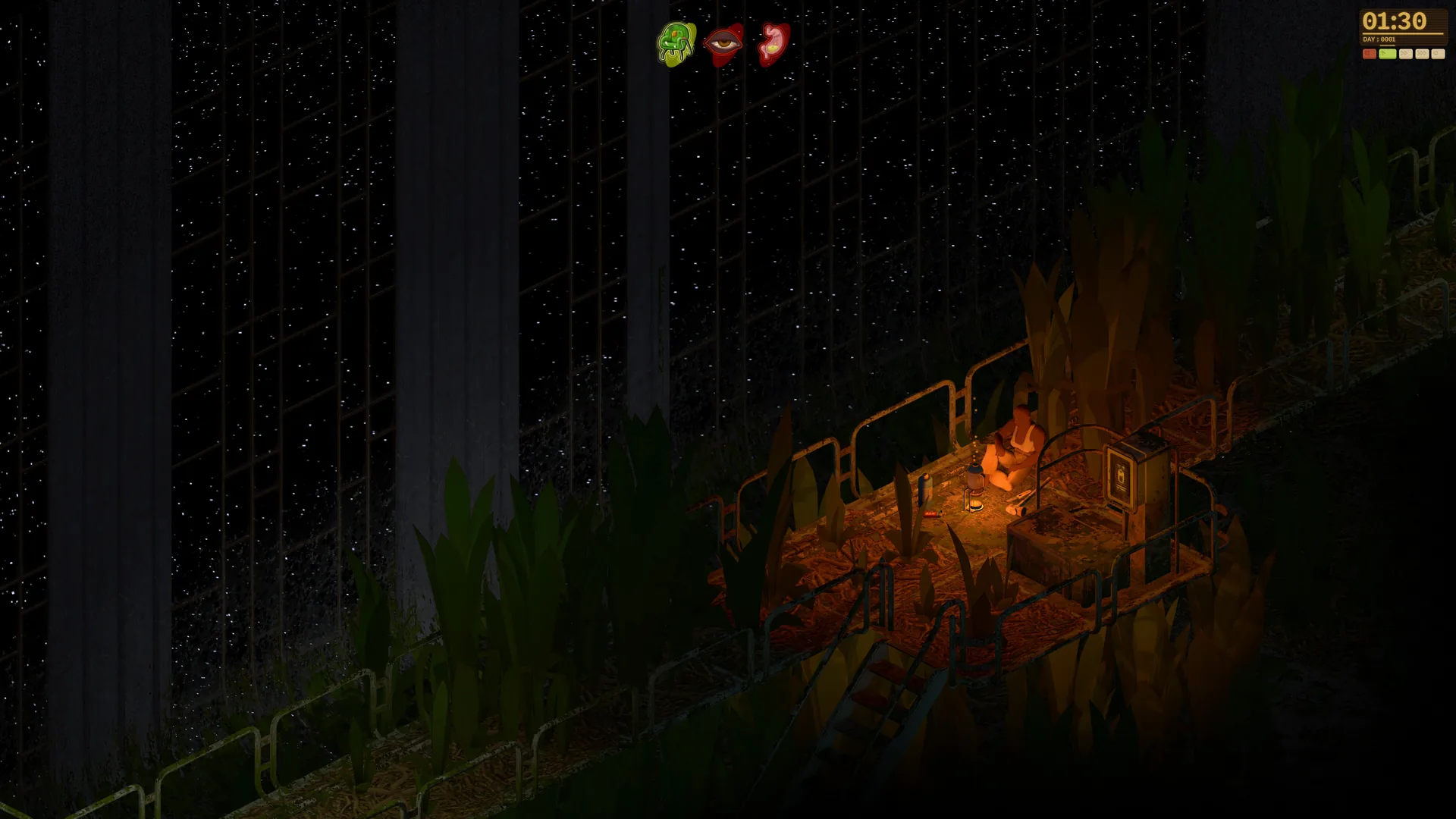
- Dandelion Void survival guide: Learn the core loop of explore, scavenge, craft, and build.
- Hunger and thirst must be managed on every expedition, not just when bars run low.
- A reliable shelter with furniture improves comfort, happiness, and long-term survival.
- Hostile plant life makes every route a risk; scout rooms before committing deep.
- Crafting priorities: tools and water-related supplies first, weapons and upgrades second.
Understanding the Dandelion Void Survival Loop
Dandelion Void drops you inside Pergola, a derelict generation ship swallowed by an alien jungle. Every Dandelion Void survival guide starts with the same truth: the game rewards preparation over aggression. Your survival loop is a cycle of exploration, resource gathering, crafting, shelter construction, and need management, and each trip into unfamiliar corridors should end with you returning to a safe base instead of scrambling for emergency supplies.
Video Highlights:
- Official trailer shows the overgrown ark corridors and jungle-infested hallways
- Base building and relic scavenging are featured as core activities
- Hostile plant ecology is a persistent environmental threat
The table below breaks down the main survival systems and how they interact:
| System | What It Covers | Impact on Survival |
|---|---|---|
| Hunger and thirst | Food and water intake during expeditions | Depletion forces risky emergency runs |
| Comfort | Shelter quality, furniture, layout | Affects recovery between expeditions |
| Happiness / morale | Long-term living conditions | Influences overall survival performance |
| Environment | Random changes across the ark | Forces route and preparation adaptation |
| Hostile flora | Camouflaged and aggressive plants | Primary source of expedition danger |
Expeditions are made deliberately less predictable by shifting conditions inside the ark. A route that was safe on your last run may be dangerous on the next one, so always plan a clear return route before pushing deeper.
Step-by-Step: Your First Days in the Ark
Follow this sequence to build a stable foundation before you take on the ship's deeper sections. These steps mirror the priorities Manzanita Interactive's own materials emphasize: secure resources, establish shelter, then expand.
Survey the Immediate Area
Explore the sections near your starting point. Identify useful rooms, entrances, hazard zones, resource containers, and locations that can serve as return points. Do not rush into unfamiliar territory without a mental map of the way back.
Gather Essential Resources
Collect available materials, food, and water-related supplies before traveling deeper. Even a small reserve gives you time to react to environmental dangers instead of panicking when a bar starts dropping.
Craft Basic Equipment
Turn gathered resources into practical gear: tools, a basic weapon, and clothing suited to the conditions you have encountered so far. Craft for the expedition you are actually taking, not the one you hope to take.
Establish a Shelter
Set up a dependable base where you can organize supplies, place furniture, and recover between expeditions. Location matters: proximity to known resources and escape routes outweighs sheer room size.
Manage Hunger and Thirst
Check your needs before every departure, not after. Leaving with enough food and water prevents a routine resource run from becoming a dangerous emergency.
Prepare Before Going Deeper
Upgrade equipment, restock supplies, and confirm a return route before entering more threatening areas or responding to changing conditions in the ark.
The most common early mistake is treating the ark like a linear dungeon. It is a cycling environment. Returning home safely with modest loot beats a deep run that ends in a loss.
Needs, Morale, and Shelter Systems
Hunger, thirst, comfort, and happiness in Dandelion Void are interconnected rather than separate meters. A well-furnished shelter feeds back into morale, and morale shapes how well your survivor handles the next expedition. This makes base quality a genuine survival investment rather than decoration.
Functional Base
- Storage for expedition supplies
- Safe recovery point
- Central hub for crafting
Comfortable Base
- Furniture improves living conditions
- Better recovery between runs
- Supports long-term morale
Expandable Base
- Room for technology repairs
- Grows with your equipment needs
- Adapts to new crafting tiers
Use this comparison when deciding where to spend early resources:
| Shelter Investment | Cost | Short-Term Benefit | Long-Term Benefit |
|---|---|---|---|
| Basic storage | Low | Organized supplies | Faster expedition prep |
| Furniture placement | Medium | Improved comfort | Better morale and recovery |
| Technology repair | Medium-High | Restored functions | Progression unlocks |
| Defensive layout | High | Safer resting spot | Survives hostile encounters |
Official materials describe shelter comfort and happiness as factors that contribute to survival performance. Layout and furniture choices have mechanical weight, so treat interior design as part of your strategy.
Exploration, Crafting Priorities, and Danger Management
Exploration in Dandelion Void means reading the ship itself. Sealed doors, vacuum-exposed sections, and hostile plant life all punish unprepared entry. Your crafting order should reflect the threats you actually face on your current routes.
Recommended crafting priority order:
| Priority | Category | Examples | Why It Comes First |
|---|---|---|---|
| 1 | Tools | Basic gathering and repair tools | Unlocks all other resource flow |
| 2 | Sustenance gear | Water collection, food prep items | Keeps expeditions from cutting short |
| 3 | Protection | Clothing suited to local conditions | Reduces environmental damage |
| 4 | Weapons | Self-defense against flora | Needed for deeper, hostile zones |
| 5 | Upgrades | Equipment improvements | Efficiency for repeat expeditions |
Some hatches and sealed sections expose you to vacuum or other extreme hazards. Confirm you have appropriate protective equipment before forcing any door that looks intentionally closed.
Hostile plants use camouflage and environmental positioning, so the safest strategy is usually observation before engagement. Note where aggressive flora grows, mark it mentally or on your own notes, and route around it when your goal is logistics rather than combat.
Survival Checklist and Common Mistakes
Run through this checklist before every major expedition. It takes seconds and prevents the majority of preventable deaths in the ark.
Pre-Expedition Checklist:
- Food and water stocked for the planned trip length
- Return route identified and memorized
- Basic weapon and protective clothing equipped
- Shelter storage organized for incoming loot
- Current environmental conditions checked
You are on the right track when expeditions get longer, your shelter gains furniture and repaired technology, and emergencies stop happening. If every run ends in a scramble, scale back your range and reinforce your base instead.
FAQ
Q: What is the core survival loop in Dandelion Void?
The loop is exploration, resource gathering, crafting, shelter construction, and need management. You venture into the derelict ark, bring materials back to a personal base, and improve the conditions that support longer and safer future expeditions.
Q: How important is base building to survival?
Very important. Shelter comfort and happiness contribute to survival performance, so furniture placement, technology repair, and layout quality are mechanical decisions, not just cosmetic ones. A good base is your recovery point, storage hub, and crafting center.
Q: How should I deal with hostile plants?
Hostile flora uses camouflage and environmental positioning. Observe before engaging, note where aggressive plants grow, and route around them when your goal is gathering rather than fighting. Craft a weapon only when your routes actually require one.
Q: Can I manage hunger and thirst during an expedition?
You can carry supplies, but management starts before departure. Check your needs, stock food and water for the planned trip length, and keep a reserve so a routine run never turns into an emergency scramble.