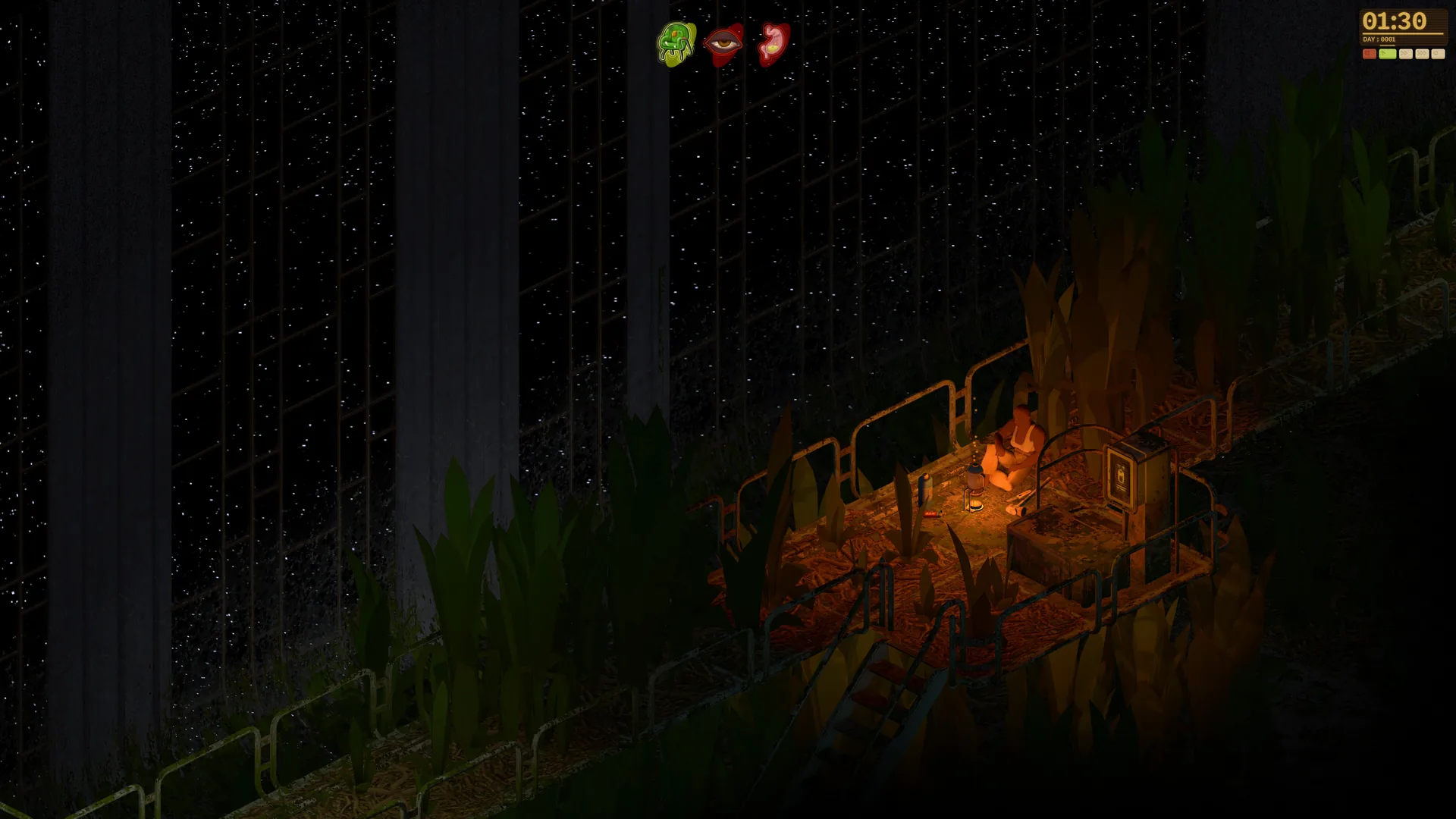
- Dandelion Void game engine tools center on a custom map editor, Lua API, and Steam Workshop support planned for the survival RPG.
- The game runs on Windows PC as a single-player experience with modding as a core differentiator.
- Creators will be able to build custom maps, outfits, weapons, scenarios, and biomes.
- Minimum specs are modest: GTX 970 / R9 290, 8 GB RAM, Windows 10 64-bit.
- Official release date is still TBA; check the Steam page for current status.
Dandelion Void Game Engine: What Powers the Void
The Dandelion Void game engine is the technology foundation behind Manzanita Interactive's survival RPG set aboard the derelict generation ship Pergola. While the developer has not published an engine brand name, the officially confirmed tooling—map editor, Lua scripting API, and content import pipelines for clothing and weapons—tells us a lot about how the game's systems are structured and how far creators can push them.
The engine's design priorities are visible in the game's core loops: fully simulated interior environments inside an overgrown starship, dynamic environmental changes between expeditions, and player-driven content creation. Manzanita Interactive has positioned modding as a first-class feature rather than a post-launch afterthought.
Video Highlights:
- Wishlist Trailer shows the derelict ark, jungle corridors, and hostile plant life in-engine
- Base building, relic scavenging, and survival systems all demonstrated in real time
- Visual tone: toxic moss greens, muted gold, deep ship-black palettes
Engine and tooling details can change before Early Access. Treat the official website, the Steam store page, and the official Discord as the authoritative sources for new engine feature announcements.
Core Engine Feature Comparison
The table below summarizes the engine-adjacent systems that are officially confirmed on the Steam page and press kit, and how they compare for creators.
| Feature | Confirmed Status | Creator Use Case | Complexity |
|---|---|---|---|
| Map editor | Planned / announced | Build custom rooms and explorable areas | Medium |
| Lua API | Planned / announced | Script events, logic, custom mechanics | High |
| Custom outfits | Planned / announced | Import clothing for characters | Low |
| Custom weapons | Planned / announced | Import weapon models and stats | Medium |
| Custom biomes | Planned / announced | New environment types | High |
| Steam Workshop | Confirmed on Steam page | Distribute and install mods | Low |
| Multiplayer servers | Planned direction | Player-hosted co-op and PvPvE sessions | High |
World Builders
- Map editor for rooms and routes
- Custom biomes for new ecology
- Best for exploration-focused creators
Scripters
- Lua API for events and logic
- Custom scenarios and objectives
- Best for systems-driven creators
Artists
- Outfit and weapon imports
- Visual customization content
- Best for asset-focused creators
The map editor, Lua API, and import tools are announced features. Exact capabilities, formats, and launch timing may differ at Early Access. Avoid assuming parity with engines like Unity or Godot until official documentation releases.
Getting Started with the Modding Tools
Follow this workflow to prepare for modding Dandelion Void once the tools ship. Building these habits now—during the demo phase—makes the transition much smoother.
Join the Official Community
Enter through the Discord link on the official website rather than third-party invites, and follow the Bluesky account for tooling announcements.
Learn the Game's Systems First
Play the public demo to understand survival, crafting, exploration, and base-building loops. Good mods extend systems creators actually understand.
Pick Your Discipline
Choose between mapping (map editor), scripting (Lua), or asset creation (outfits/weapons). Lua scripting has the steepest learning curve but the widest reach.
Study Lua Fundamentals
If you plan to script scenarios, practice general Lua basics now. The API details are game-specific, but the language syntax transfers directly.
Publish via Steam Workshop
When tools launch, distribute your mods through Steam Workshop so players on the Steam Community Hub can find and subscribe to them.
Creators who learn Lua and study the demo's environment design before the editor launches consistently ship higher-quality first mods. The demo is your free reference for how the engine handles rooms, hazards, and item placement.
Engine Performance & System Requirements
The currently published minimum configuration gives a baseline for what the engine demands on PC. Requirements may change before Early Access.
| Category | Minimum Requirement | Notes |
|---|---|---|
| OS | Windows 10 64-bit | 64-bit installation required |
| CPU | Intel Core i5-4590 / AMD FX 8350 | Modern 64-bit desktop CPU advised |
| RAM | 8 GB | Extra memory helps with background apps |
| GPU | NVIDIA GTX 970 / AMD R9 290 | DirectX-compatible dedicated card |
| Storage | 10 GB available | Leave headroom for updates |
Mod creators should budget above minimum specs: running the map editor alongside the game and asset tools benefits from 16 GB RAM and a stronger GPU.
| User Profile | Recommended Setup | Rationale |
|---|---|---|
| Player (minimum) | Listed minimum specs | Baseline playability |
| Player (comfortable) | 16 GB RAM, GTX 1060-class+ | Higher framerates in dense jungle areas |
| Mod creator | 16 GB+ RAM, SSD, mid-range+ GPU | Editor, game, and tools running together |
The Steam page currently lists the release date as to be announced, with Windows PC as the platform and single-player as the core mode. Mod support, Workshop integration, and multiplayer are announced directions rather than shipped features as of October 2026.
Creator Readiness Checklist
Prepare for Dandelion Void Modding:
- Join the official Discord via dandelionvoid.com
- Complete the public demo and map its explorable area
- Learn basic Lua syntax and scripting patterns
- Follow the official Bluesky and YouTube channels for tool news
- Wishlist the game on Steam and join the Community Hub
- Draft one mod concept (map, scenario, or asset) to refine later
FAQ
Q: Does the Dandelion Void game engine use Unity or Unreal?
Manzanita Interactive has not publicly named a third-party engine for Dandelion Void. What is confirmed is the tooling layer exposed to creators: a map editor, a Lua API, and import pipelines for custom outfits and weapons, distributed through Steam Workshop.
Q: Will mods be available at launch?
Modding tools, including the map editor and Lua API, are announced planned features highlighted on the official Steam page. Their exact availability relative to Early Access and full release has not been finalized, so follow official channels for timing.
Q: Do I need to know programming to mod Dandelion Void?
Not for every mod type. Custom outfits and weapons rely on asset import workflows, while custom scenarios and gameplay mechanics use the Lua API. Lua scripting requires programming fundamentals, but it is one of the more approachable scripting languages for beginners.
Q: Can mods add multiplayer features?
The game plans cooperative play, PvPvE, and player-hosted servers, and custom scenarios are intended to support different multiplayer formats. What the Lua API will expose for multiplayer specifically is not yet documented, so treat ambitious multiplayer mods as a wait-and-see.