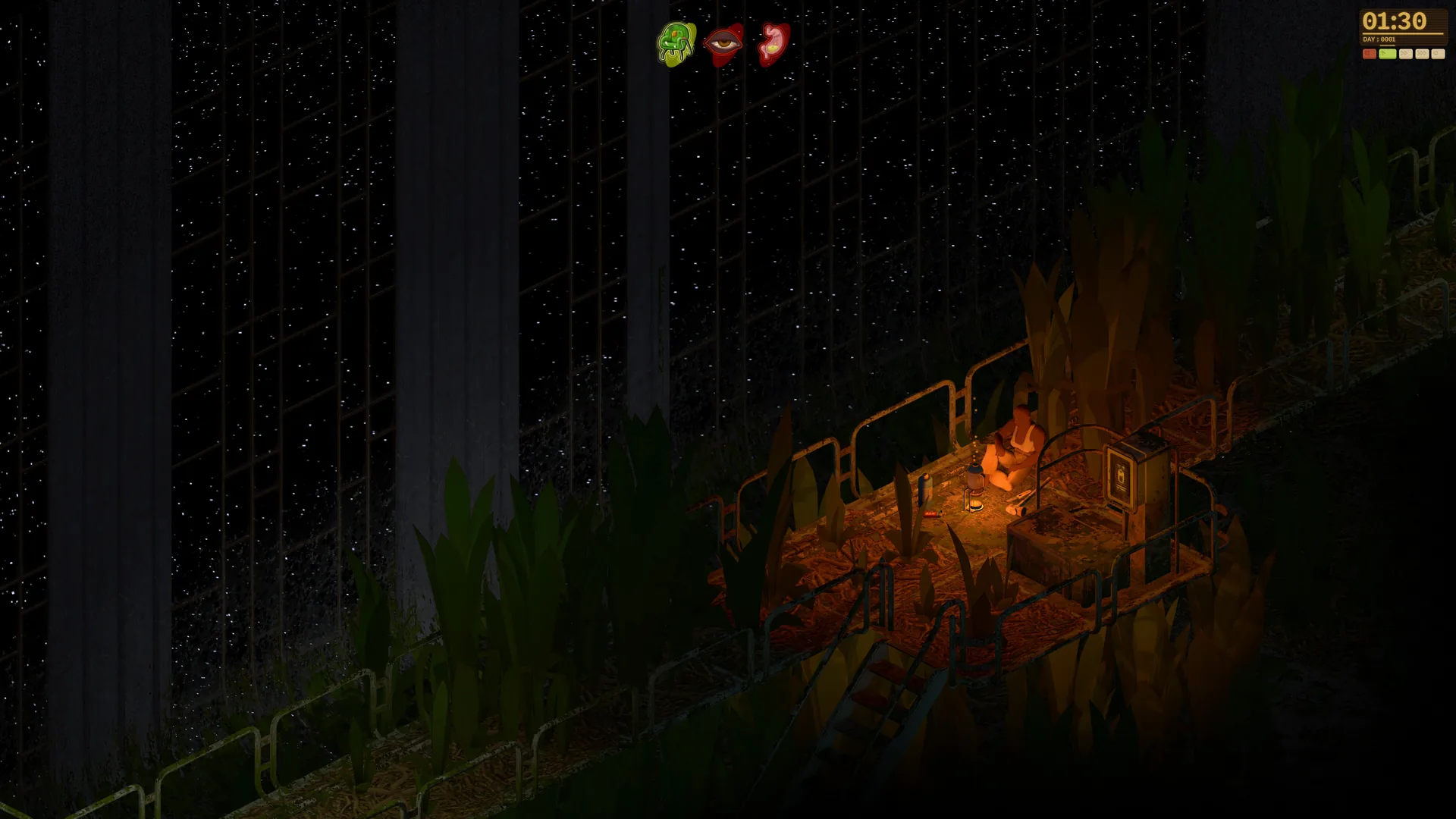
- Dandelion Void base building turns salvaged junk into a livable home aboard the derelict ark Pergola.
- Comfort matters: furniture and shelter quality feed into happiness and survival performance.
- Plan zones early: separate storage, crafting, rest, and prep areas from the start.
- Choose sites carefully: proximity to resources and return routes beats a scenic view.
- Repair technology: restoring ship systems is a core part of long-term base progression.
Base Building Fundamentals in Dandelion Void
Dandelion Void base building is one of the pillars of the game's survival loop. Every expedition into the abandoned ark produces raw materials, and your shelter is where those materials become weapons, clothing, repaired technology, furniture, and living space. The game is built around repeated runs into hostile, plant-overgrown corridors followed by returns to a personal refuge where you craft, rest, and prepare for the next trip.
The official Wishlist Trailer highlights exactly this rhythm: derelict corridors, relic scavenging, shelter construction, and dangerous flora. Watch it to see the building systems in context.
Video Highlights:
- Shows shelter construction inside the overgrown ark
- Demonstrates relic scavenging feeding into base upgrades
- Highlights hostile plant encounters near build sites
- Captures the survival-horror atmosphere shaping base layout decisions
Base construction in Dandelion Void serves two roles at once. Functionally, it is your crafting hub, storage depot, and recovery point. Visually, it is a customizable home inside a dead starship, and the quality of that home feeds back into comfort and happiness stats that affect how well your survivor performs between expeditions.
Do not treat the shelter as a decoration project. Every wall, workbench, and piece of furniture should shorten the time between "return from expedition" and "ready to leave again."
Shelter Site Selection
Where you build shapes everything that follows. The ark's interior is a mix of intact compartments, broken sections, vacuum-exposed rooms, and corridors reclaimed by alien jungle. A good site minimizes travel risk while maximizing access to what you need.
| Site Factor | Why It Matters | Rating |
|---|---|---|
| Near intact airlock/entrance | Short, safe return route from expeditions | ★★★★★ |
| Close to resource containers | Fewer long trips for basic materials | ★★★★ |
| Single entry point | Easier to monitor and control threats | ★★★★★ |
| Away from hostile plant clusters | Fewer ambushes near your door | ★★★★ |
| Access to ship power/systems | Enables technology repairs later | ★★★ |
| Sealed door proximity | Useful shortcut but carries vacuum risk | ★★ |
Some sealed doors on Pergola lead to vacuum-exposed areas. Never place your main shelter against an unverified bulkhead until you know what is on the other side.
Random environmental changes make parts of the ship less predictable, so a site that feels safe at the start can shift over time. Build with adaptability in mind: leave room to expand into adjacent compartments rather than locking yourself into a single small room.
Step-by-Step: Building Your First Base
Follow this sequence in the public demo and early game to get a functional shelter running before you push into deeper, more dangerous sections of the ark.
Claim a Secure Room
Pick a compartment with one or two entrances, defensible walls, and a short path back to your exploration route. Clear out debris and note every opening.
Set Up Core Storage
Place storage first. Sorted containers for materials, food, water supplies, and relics keep every return trip efficient and prevent supply loss.
Install Crafting Stations
Add workbenches for tools, weapons, and clothing close to storage. Keeping the crafting chain compact saves time during prep.
Add Rest and Living Space
Furnish a rest area with basic furniture. Comfort and happiness in the shelter affect recovery between expeditions, so this is not optional decoration.
Repair Ship Technology
As resources allow, repair the technology in and around your base. Restored systems turn salvaged parts into practical upgrades and progression.
Expand Along Your Route
Grow the base toward the areas you explore most, adding secondary storage caches and rest points to extend how far you can safely travel.
Once you have storage, crafting, rest space, and at least one repaired system under one roof, your survival loop is stable enough to support long-range exploration.
Base Systems and Layout Comparison
Different layout philosophies suit different playstyles. Compare the three core approaches before committing resources.
Compact Single-Room
- Fastest to build
- Everything within reach
- Easy to defend
- Limited expansion space
Multi-Room Complex
- Dedicated functional zones
- Storage, crafting, rest separated
- Room to grow
- More entrances to secure
Network of Outposts
- Extends exploration range
- Rest points on long routes
- Reduces return trips
- Costs more resources to maintain
Each system inside the shelter contributes to the overall loop. The table below breaks down what each base system does and when to prioritize it.
| Base System | Primary Function | Priority |
|---|---|---|
| Storage containers | Organize materials, food, water, relics | First |
| Crafting stations | Tools, weapons, clothing production | Second |
| Furniture | Comfort, happiness, recovery quality | Third |
| Technology repairs | Progression, practical base upgrades | Ongoing |
| Secondary outposts | Extended range, route safety | Late |
Official game information links shelter comfort and happiness to survival performance. A well-furnished base measurably supports your character between expeditions, so invest in furniture before pushing into high-risk zones.
Defense and Hazard Awareness
Your shelter is your recovery point, and losing access to it can end a run. Threats in Dandelion Void come primarily from hostile plant life and environmental hazards rather than structured sieges, so base defense is mostly about awareness and routing.
| Threat Type | Risk to Your Base | Countermeasure |
|---|---|---|
| Hostile plants | Ambushes near entrances and routes | Clear vegetation around doors, watch camouflage |
| Vacuum zones | Exposure when sealed doors fail or open | Verify rooms behind bulkheads before building adjacent |
| Environmental changes | Route and area conditions shift unpredictably | Keep alternate return paths, cache supplies |
| Deep-ark hazards | Far from help on long expeditions | Establish outposts, restock before pushing deeper |
The ark changes. Always maintain at least two known ways back to your shelter so a blocked corridor or hostile growth does not strand you far from home.
Base Building Checklist
First Base Milestones:
- Secure a room with a controllable entrance
- Install sorted storage for materials and supplies
- Set up core crafting stations
- Furnish a rest area for comfort and recovery
- Complete first technology repair
- Establish a second rest point deeper in the ark
Restock food and water, repair gear, and plan a return route before every deep expedition. A strong base makes preparation fast, and fast preparation keeps you alive.
FAQ
Q: Does base building matter in Dandelion Void, or is it just cosmetic?
It directly affects survival. Shelter quality, furniture, and comfort feed into happiness and recovery, and the base serves as your crafting, storage, and preparation hub for every expedition into the ark.
Q: Where is the best place to build a first shelter?
Look for a room near your main exploration route with one or two entrances, close to resource containers, and away from hostile plant clusters and unverified sealed doors that may hide vacuum zones.
Q: What should I build first in a new base?
Storage first, then crafting stations, then furniture for rest and comfort. Technology repair is an ongoing priority that turns salvaged parts into lasting base upgrades.
Q: Can I have multiple bases in Dandelion Void?
Yes, a network of outposts is a viable strategy. Secondary rest points and supply caches extend how far you can safely explore from your main shelter on Pergola.